

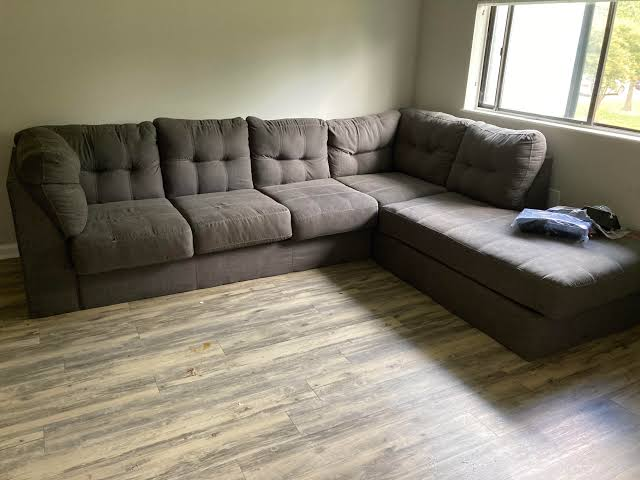
You need a couch. Your bank account says $49. The internet says you cannot possibly get a decent sofa for that price. But what if the internet is wrong about that math?
This post walks through the real numbers behind budget secondhand seating. You will see what separates a steal from a headache and how to shop with confidence.
What Your Living Room Looks Like Without a Couch (vs. With One)
You come home after a long day. You sit on a kitchen chair or your bed. There is no place to actually relax. Your space feels like a storage unit, not a home. Friends do not come over because there is nowhere for them to sit.
Before: A folding chair pulled up to a cardboard-box coffee table. Your back hurts just looking at it.
Now picture the same room with a loveseat in the corner. You sink into it after work. You watch a movie without repositioning every five minutes. Someone can actually visit you. Your apartment feels like a place you chose, not a place you settled for.
After: A clean loveseat anchors the room. Two people can sit comfortably. The space finally feels finished.
The gap between these two pictures is not thousands of dollars. It is often under a hundred.
What You Actually Get at Each Price Point
New couches start in the hundreds and climb fast. But the secondhand market has its own tiers. Here is what your money buys at each level.
| Piece | New Retail | Secondhand (Curated) |
|---|---|---|
| Ashley loveseat | up to $700 | $49–$400 |
| West Elm desk | $500–$1,500 | $50–$200 |
| Stressless leather loveseat | $3,495 | $1,930 |
An Ashley loveseat listed at $49 brings the entry point below a dinner out. A West Elm desk that retails for $1,500 sits in the same showroom for $250. These are not broken castoffs. They are inspected pieces with disclosed flaws.
The difference between “cheap” and “good value” comes down to one thing: someone checked it before you bought it. When every scratch gets photographed and every wobble gets noted, you know what you are buying. That transparency is what makes affordable used furniture work as a category.
You do not need a truck full of cash to start. A used couch for sale at the bottom of the price range can still serve you for years. Cosmetic flaws fix easily. Scratches buff out. Cushions can be reupholstered. The bones of a good piece last far longer than its surface story.
The 7-Point Budget Couch Audit
Before you hand over money for any secondhand sofa, run through this list. Every “yes” moves you closer to a smart buy.
Frame check. Lift one corner. Does it feel solid and heavy? A lightweight or creaking frame signals particle board that will fail.
Sit test. Sit in every spot for at least 30 seconds. No springs should poke you. No sagging should pull you toward the floor.
Leg inspection. All four legs must be present and tight. Wobbly legs mean stripped threads or cracked joinery.
Fabric scan. Look for rips, stains, and pet damage. Small marks are fine. Large tears or embedded odors are not worth the fix.
Cushion rebound. Press down hard on each cushion. It should bounce back within seconds. Flat cushions mean the foam is dead.
Disclosure review. Read every condition note. If the seller hides flaws, walk away. If they list them openly, you can make an informed call.
Delivery math. Know the total cost to get it home. A $49 loveseat stops being a deal if transport adds $200.
Should You Fix Up a Secondhand Couch or Just Buy New?
A worn cushion or a surface scratch does not make a couch trash. Most flaws on a well-built frame cost little to fix. Reupholstering cushions runs far less than buying new. Scratches buff out with basic supplies.
Buying pre-owned also keeps furniture out of landfill. Secondhand pieces have already off-gassed most VOCs. You skip the chemical smell of a brand-new sofa without paying the brand-new price.
The real decision is not “new versus used.” It is “inspected versus unknown.” An undisclosed stain on a mystery listing is a gamble. A photographed scratch on a verified listing is just information. You can act on information. You cannot act on hope.
Frequently Asked Questions
Is it good to buy second-hand furniture?
Yes, when you buy from a source that inspects and discloses condition. A used couch with a solid frame and clean upholstery performs just as well as a new one. You avoid the off-gassing period and pay a fraction of retail.
Is Ashley furniture cheap quality?
Ashley makes entry-level to mid-range furniture that holds up reasonably well. A secondhand Ashley loveseat at $49 to $400 offers strong value compared to up to $700 new. The frame and construction are consistent enough that you can assess condition quickly.
Where can I find inspected secondhand furniture without the risk?
Marketplaces like Reperch list curated pieces with disclosed flaws and flat-fee delivery. You browse online, read the condition notes, and know exactly what you are getting. Showrooms in San Francisco, Phoenix, and Los Angeles let you test pieces in person.
What happens if I change my mind after buying a used couch?
A seven-day return policy protects you from buyer’s remorse. Items sell as-is with disclosed condition, so read the listing carefully before purchasing. A free ten-day hold after purchase gives you time to arrange pickup or delivery.
What Staying Couch-Less Actually Costs You
A bare living room costs more than money. It costs your comfort at the end of every day. It costs the social life you postpone because hosting feels embarrassing. It costs the rest your body needs after work, school, or a long commute.
You tell yourself you will buy a couch when you save enough. But the savings target keeps moving. Meanwhile, you spend months with nowhere to sit. That tradeoff does not make sense when the entry point sits at forty-nine dollars.
Every week you wait is a week your space does not feel like yours. You do not need to spend a thousand dollars to change that. You need a clean frame, honest condition notes, and a delivery option that does not double the price.
The math works. The only missing variable is you deciding to act on it.