

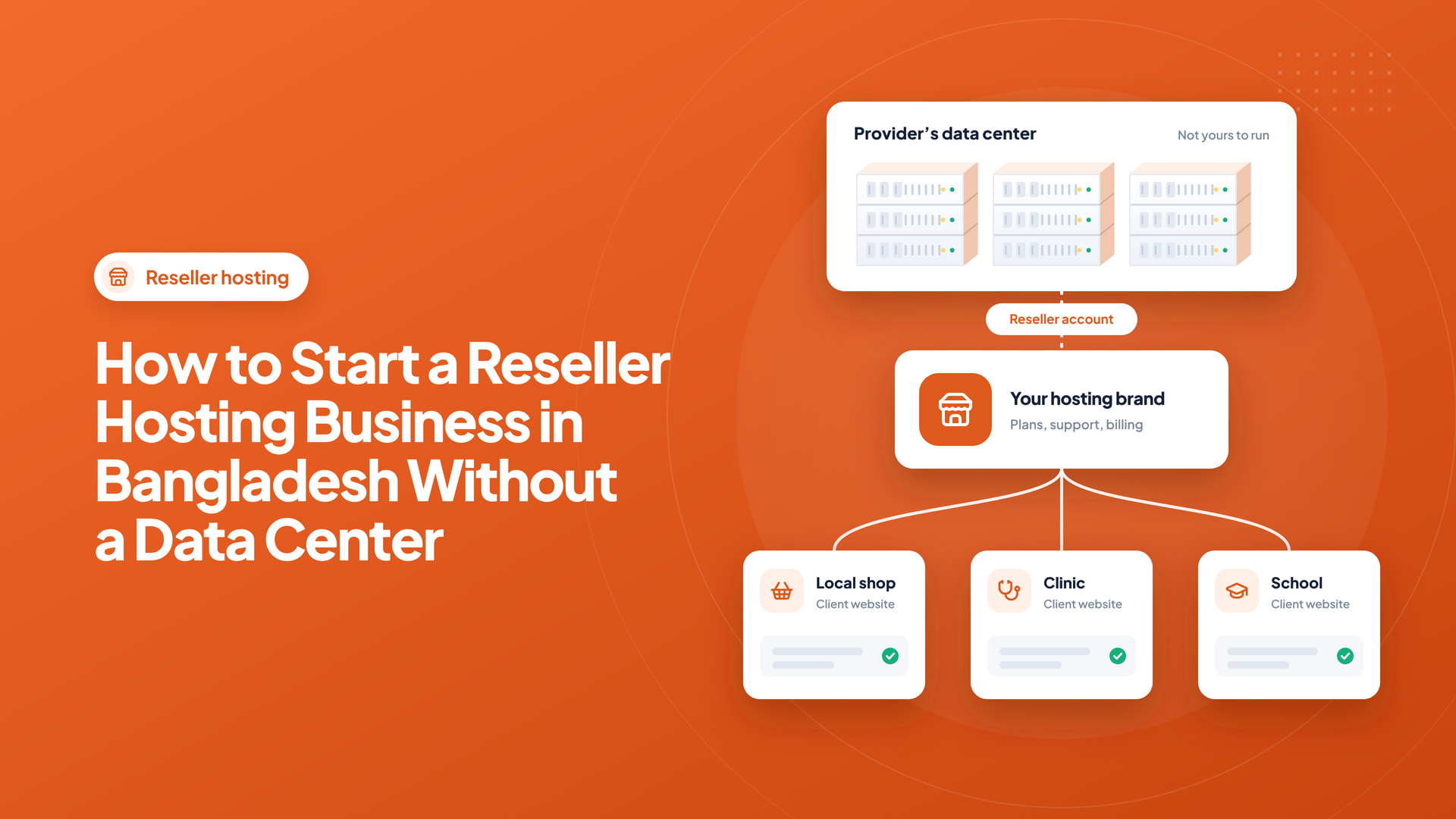
You do not need to own a physical data center to sell hosting services under your own brand. Reseller hosting allows a business to purchase server capacity from an established provider and divide it into customer packages. The opportunity is real, but profitability depends on support and operations, not just selling disk space.
Quick answer: A profitable reseller hosting business starts with a clear niche, accurate resource limits, sustainable pricing, honest support policies, and working onboarding procedures—not only low wholesale prices.
Define your first customer group
Choose a narrow audience: local web design clients, freelancers who maintain WordPress sites, small agencies, or regional businesses. A targeted service is easier to explain and support than an offer that claims to serve every type of workload.
Write down what each customer receives, including storage, supported websites, email, SSL, backup access, and the service hours you can personally deliver.
Understand the reseller account
A typical reseller package offers WHM to manage several cPanel accounts. This allows customer isolation at the account level and simplifies common tasks such as creating packages, suspending overdue accounts, and setting limits.
Check account-count restrictions, total disk quota, CPU policies, private nameserver support, and whether a billing platform is included. Different providers and plans vary significantly.
Calculate a realistic margin
Monthly revenue is not pure profit. Subtract your reseller bill, domain costs, payment gateway fees, support time, billing software, refunds, taxes, and marketing expenses. Then allow for growth and incidents.
Consider a hypothetical reseller spending BDT 2,000 per month on infrastructure and software. Ten clients paying BDT 400 each produce BDT 4,000 gross revenue, leaving BDT 2,000 before the remaining expenses. This example is for planning, not a guaranteed earning projection.
Create clear service policies
Publish acceptable use rules, backup limitations, renewal timing, suspension policies, and support scope. Customers should know whether you manage their WordPress installations or only provide server access. Never advertise backup coverage you cannot demonstrate.
Make onboarding repeatable
Use a consistent process for receiving an order, verifying contact information, creating the account, configuring DNS, enabling SSL, and sharing secure login details. Test one full customer journey yourself before taking paid orders.
When assessing infrastructure, Intelwebhost’s reseller hosting packages illustrate plan-level features such as WHM/cPanel account allowances, private nameservers, and selected billing integrations. Confirm which features belong to the exact tier you choose.
Build a hosting reseller offer around a real customer type
A reseller business should choose a narrow audience before choosing a logo. One useful niche is independent web designers who need client hosting and billing under a single brand. Another is small local agencies that want managed WordPress support for recurring revenue. A reseller targeting everyone competes on price alone; a reseller serving a recognizable need can compete on clear onboarding, reliable communication, and specialized support.
Write one paragraph defining the ideal customer, their common problems, and what your service includes. Then design two or three simple plans with differences customers understand: number of websites, storage, supported applications, migration assistance, and support scope. Avoid unlimited claims that conflict with actual account limits.
Make the unit economics work
Calculate the provider’s monthly or annual reseller fee, payment gateway fees, domain handling, billing system fees, taxes where applicable, marketing expense, and your time. Then estimate support cost per customer. A plan sold for a modest recurring price can become unprofitable if several customers require frequent custom development, site recovery, or after-hours work that was never priced into the offer.
Use a conservative spreadsheet. For illustration, if your recurring fixed costs total BDT 8,000 per month and the average contribution after variable costs is BDT 400 per customer, you need 20 active customers merely to cover those fixed costs. That does not include the owner’s desired salary or unexpected incidents. These figures are hypothetical; use your own verified expenses.
Define the service boundary clearly
State whether you provide server hosting only, WordPress updates, site migration, malware cleanup, email setup, or development. Define backup frequency and what happens when a customer requests restoration. Document renewal terms, late payment policy, resource abuse handling, prohibited content, and cancellation procedures. Clear terms protect both your customers and your team.
Make domain ownership unambiguous. Encourage customers to hold domains in their own name or business account and ensure they can transfer their assets. Reseller branding should not prevent legitimate portability when a client leaves.
Automate the repeatable steps, not trust
Billing and provisioning tools can help create hosting accounts, issue invoices, and send reminders, but automation should have safeguards. Validate orders before resource creation, verify successful payment confirmation, and send human-readable welcome instructions. Test failures: what if a gateway callback is delayed, a provisioning API returns an error, or a domain is not registered despite successful payment?
Give support agents access to accurate customer records without granting unnecessary root privileges. Keep client credentials protected and retain an audit trail for important changes.
Build a reputation through service routines
Publish documentation for domain pointing, SSL setup, email configuration, backups, and common WordPress errors. Maintain a support queue with clear escalation paths. During incidents, provide factual updates instead of vague reassurances. Review churn, missed renewals, and repeat ticket causes monthly. Customers tend to remember whether the business communicates clearly when something fails.
Launch plan for the first ten customers
- Test provisioning and cancellation with internal trial accounts.
- Document package limits and renewal prices.
- Create onboarding messages and support procedures.
- Run backup and restoration drills.
- Publish a clear domain ownership policy.
- Choose a simple monthly financial dashboard.
- Gather genuine feedback and improve recurring pain points.
Build trust before scaling ads
Start with a manageable number of customers, document common support issues, and measure response time. Reliable service and straightforward renewals encourage retention. Low prices alone rarely sustain a hosting business for long.
A reseller model works best when you operate as a responsible service provider rather than a passive middleman. Your brand will be judged by the experience customers receive when something goes wrong.
Frequently asked questions
Do I need to own a physical server to resell hosting?
No. Reseller hosting lets you package and support customer accounts using infrastructure operated by a provider.
What is the biggest mistake new resellers make?
Often underpricing support work or promising unlimited resources and managed services that are not included in their upstream plan.
Can reseller hosting become a sustainable business?
Yes, if pricing, service boundaries, operational reliability, customer acquisition, and support costs work together over time.